When Contemplating Sister Death, Remember Mother Earth
June 7, 2026 · Ellen Brumder
A Franciscan Perspective on Burial
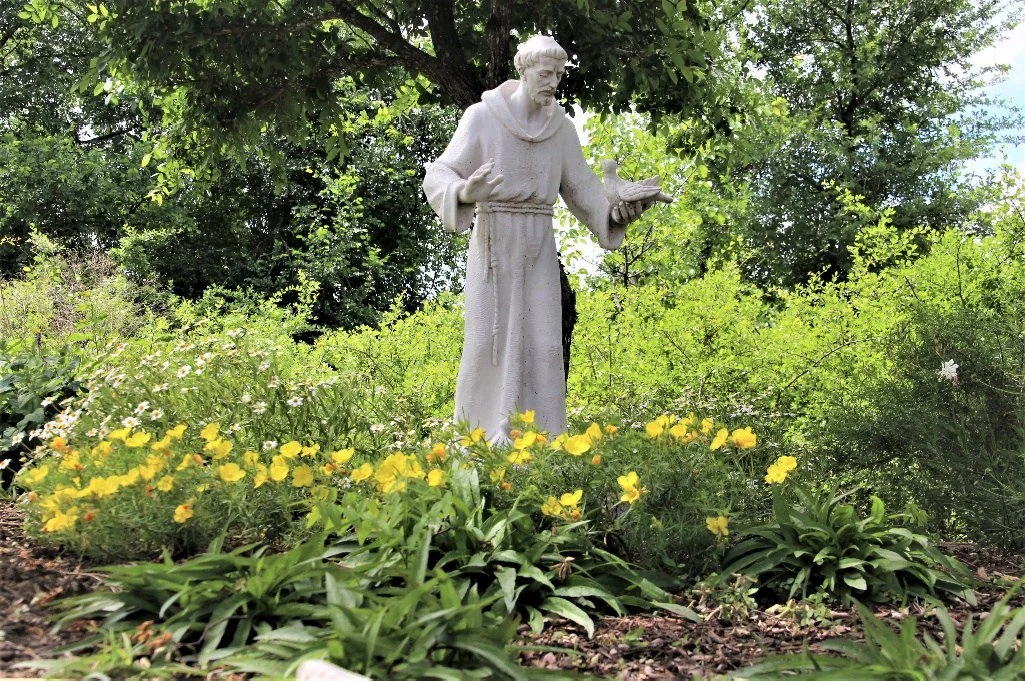
On October 4, 2004, the Feast Day of St. Francis of Assisi, Bishop Gregory Aymond blessed the wondrously beautiful land at Our Lady of the Rosary Cemetery & Prayer Gardens, consecrating it as sacred grounds. St. Francis recognized God's presence reflected throughout creation, inspiring his profound love for animals, nature, and the environment. As the patron saint of ecology and animals, his legacy continues to inspire faithful stewardship of God's creation. It is especially meaningful that we now celebrate the "Year of St. Francis" in honor of his enduring example of humility, peace, and care for the natural world.
When Contemplating Sister Death, Remember Mother Earth!
A Case for Green Burial
Now about death, you really don't get a choice. Even though life has presented you with endless choices, large and small, sacred and mundane, roads not taken, bridges crossed, our pilgrimage through life always meets Sister Death. No one living gets to escape this reality. But we do have a choice in how we face death. Do we see death as a natural part of living — a change in form leading to new life — or a fearsome extinction, or perhaps a simple turning off the lights at the end of a long day? How we face Sister Death reveals much about our common humanity, but also about our faith and who we are as an individual.
Informed Choice
As a founder of a cemetery outside of Austin in Georgetown, Texas, I have observed a wide range of attitudes and cultural preferences toward burial. Families are free to choose natural, "traditional" or cremation burial at Our Lady, yet some people exhibit such unease at death and the most natural processes that follow (and surround us everywhere), that they go to extraordinary measures to try to stop them. Of course these are as futile as trying to stop death, but even still, a "traditional" burial, American style, would likely have the loved one's body embalmed, placed in an expensive wood or steel casket, often inside a sealed vault or concrete liner, in a sterile, manicured cemetery that only allows plastic flowers and generic headstones in grey or black granite from China.
The truth of this "tradition," however, is that not only can we not stop the natural processes that follow death, but in fact, these futile efforts to preserve the body indefinitely are also harmful to Life on planet Earth. Embalming adds carcinogenic toxins into our beloved dead and into the earth, exposing funeral home workers to one of the top 10 most hazardous chemicals, formaldehyde, according to the EPA. 800,000 gallons of this carcinogenic cocktail are put into the earth each year due to embalming fluid leaching out of the casket and into the soil. Additionally, 115 tons of steel and 4 million acres of woods go into the making of caskets and vaults. Two billion tons of concrete go underground into grave liners annually.
Similarly, cremation is growing rapidly in popularity, but many do not realize that this option may be an economical one, but it is not an environmentally sound one. The worst ecological scenario is if one is embalmed for the funeral and the cremation occurs afterwards, but many would be surprised to know that direct cremation also has its hazards. The CO2 emissions for the 1.4 million people cremated last year equaled the emissions of 52,000 cars driven annually. The smoke released from the hot cremation fires contains harmful substances such as carbon dioxide, carbon monoxide, dioxin, and mercury vapor, all of which return to damage the earth and pollute water.
Sustainable Living In Dying
The happy news is that once informed of the sustainability issues and choices, many people come to appreciate green burial, and 54% of Americans are now considering natural burial. While Our Lady is proud to be a forerunner in this ecological movement within the US, we hope it grows well beyond the few in Texas, and the 93 cemeteries nationwide, presently offering this benevolent, sustainable way of life after death.
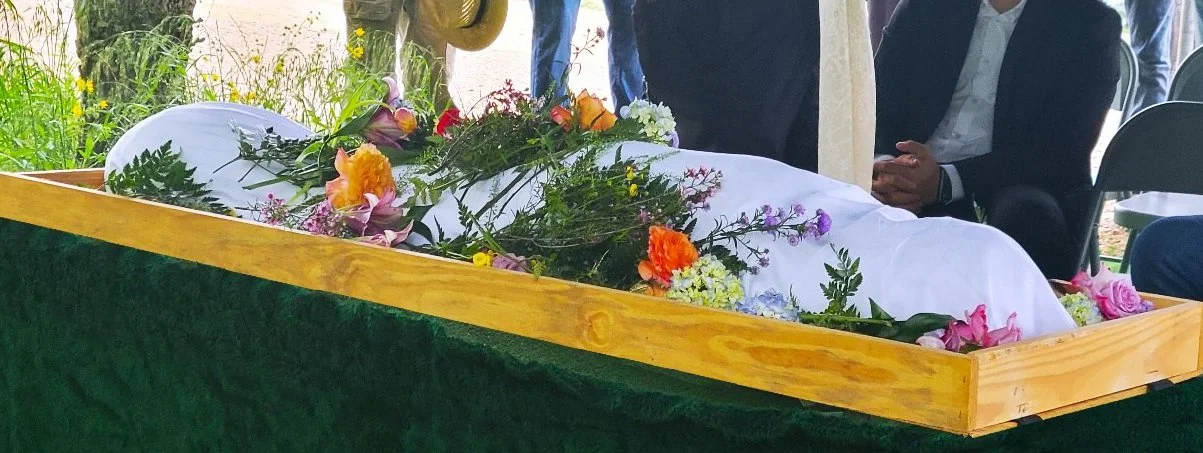
Green burial takes many forms, but all green or natural burials have some basic similarities: the loved one's body is buried whole in the earth, not cremated; the body is not embalmed; and the body is wrapped in a shroud or placed in another biodegradable container, such as a wicker basket or simple wood or cardboard casket. Finally, the loved one's body is lowered into the "sleeping place" (the Greek meaning for cemetery). Down 4–5 feet below the surface of the earth is a quiet place, a depth at which one gently returns, "ashes to ashes, dust to dust," to that from which all life arises.
Consolation and Wonder, Dormant Life and Rebirth
From generation to generation throughout the world, humankind perennially reaffirms the interconnectedness of all living things, our dependence on the Earth for our life and sustenance and the natural cycles of death and rebirth that constantly surround us. Most of the world, excepting some First World countries today, have long practiced natural burial as part of their faith traditions. Out of our own embrace of Franciscan simplicity, Our Lady welcomes families of all beliefs to choose green or natural burial as part of their spiritual journey with Sister Death.
To experience Our Lady of the Rosary is to encounter a different kind of cemetery, full of wondrous natural beauty, contemplative walks, legendary wildflowers, woods leading to a waterfall and a spring-fed pond. This is where turtles and blue herons, butterflies, dragonflies, and fireflies find sanctuary. In this burial sanctuary, all people of goodwill are welcomed, united in their mortality and humanity under a blanket of wildflowers in the spring. This is a place where consolation is poured out, in the healing cycles of nature, in wonder of her sunsets over the pond, and where other grieving visitors become friends while sharing losses and gardening advice.
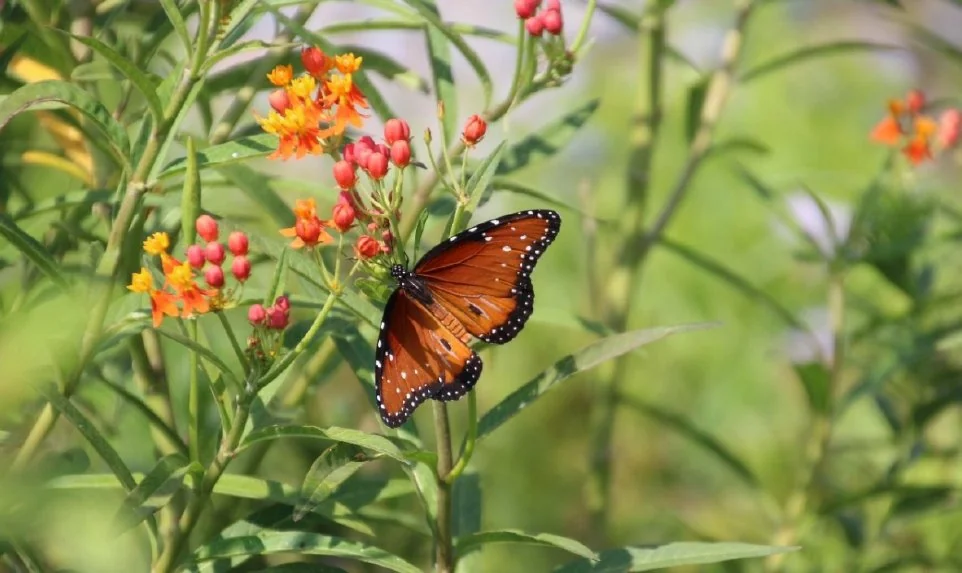
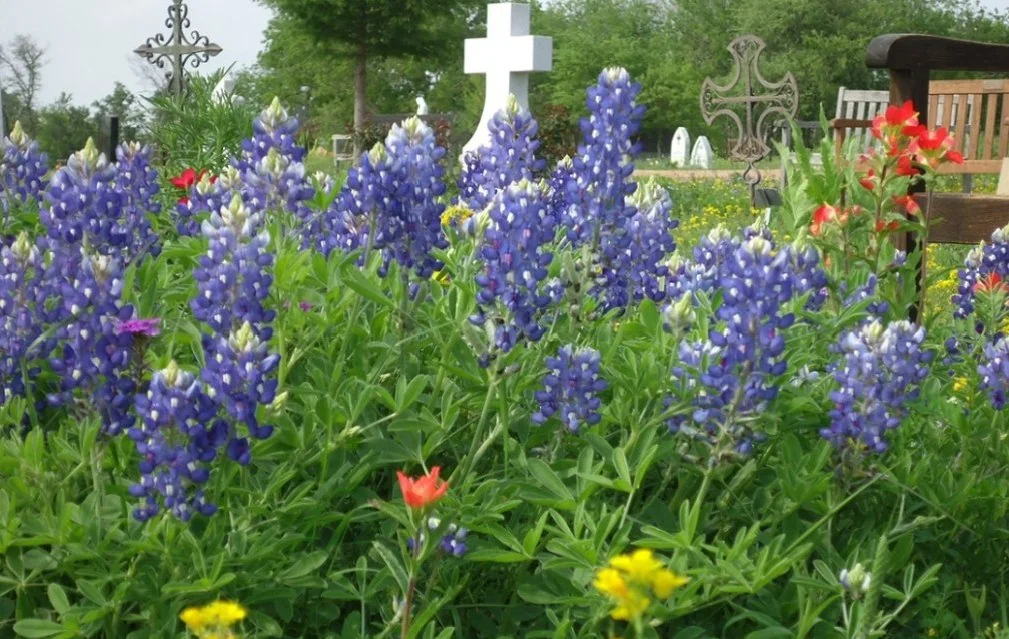
Here there is the freedom to plant a garden over a loved one's grave and feel the healing of the soul while the Earth mends and offers up new life; seedlings become bluebonnets, pale pink and white striped wine cups, and other surprising little gifts of nature. One sees firsthand that nothing ever dies but only changes form, in the seasonal cycles where winter looks brown and lifeless but then resurrects in a springtime of blooms and fragrance.
During our lives, Mother Earth sustains us, feeds us, and fills us with awe and wonder. And we have a gift of thanksgiving to give her, our very bodies, filled with beneficial nutrients to return to the earth.
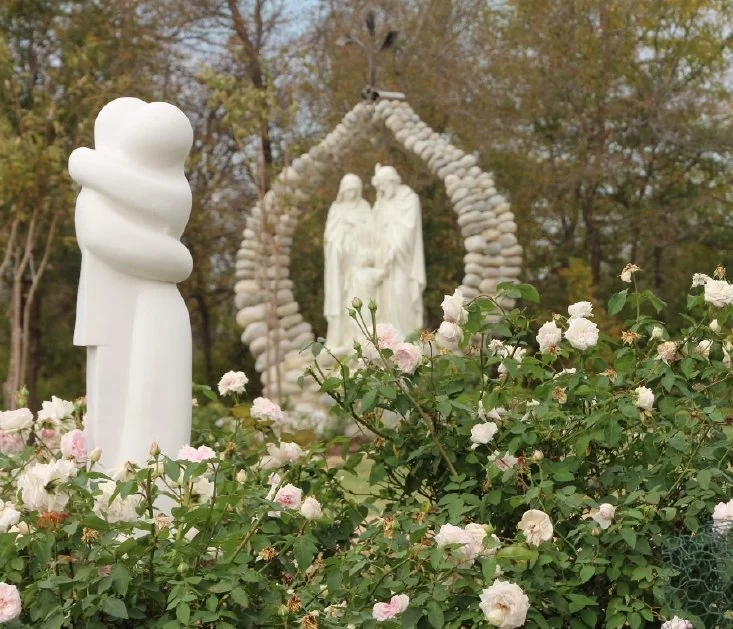
As we await in our 'sleeping place' the Return of the Bridegroom, let us walk in peace with Sister Death and remember with gratitude our Mother Earth.